Press & Media
What if we’ve been reading Jesus’ most famous sermon all wrong? What if the Sermon on the Mount was never meant to be a blueprint for Christian living?
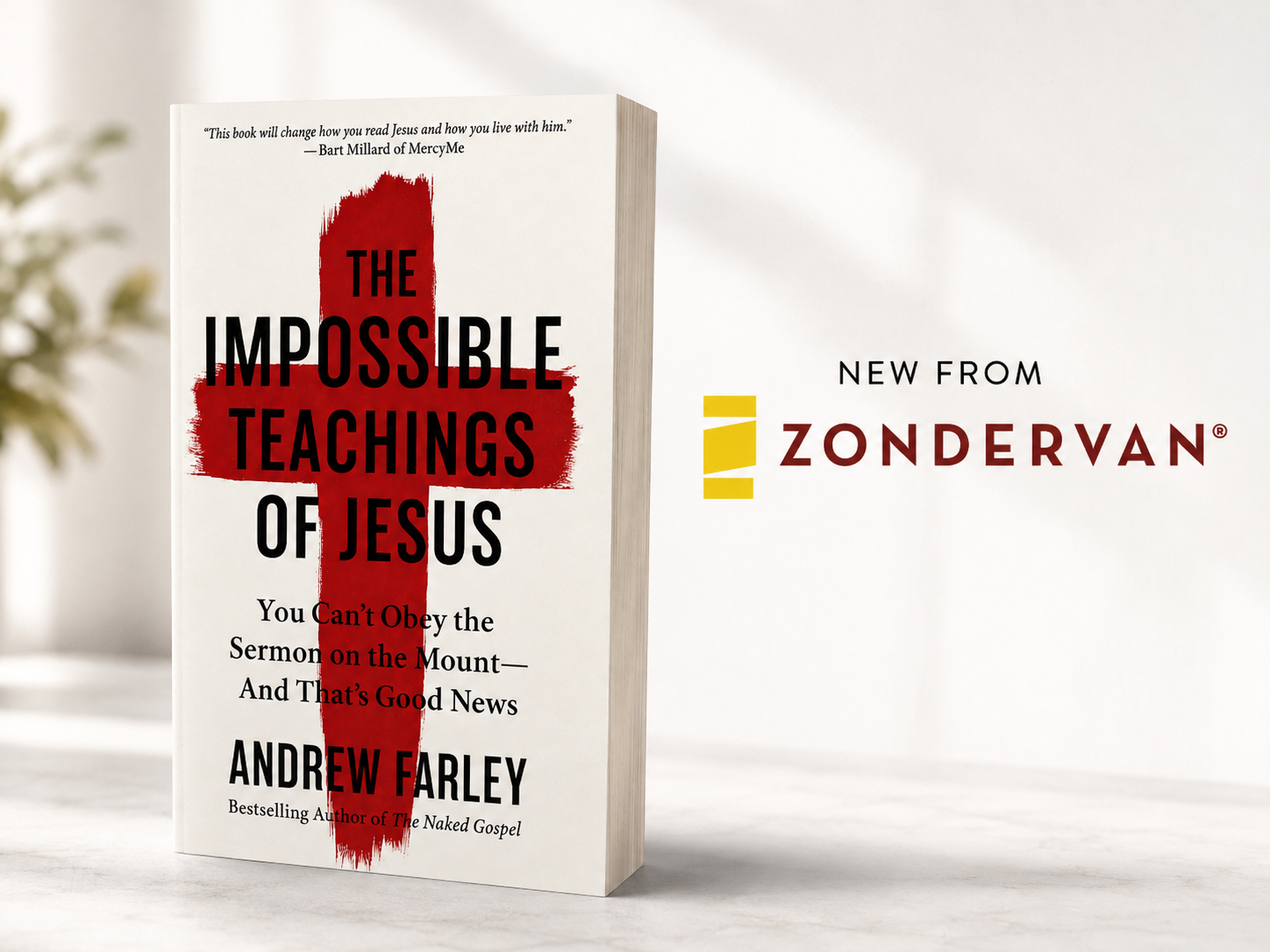
The Impossible Teachings of Jesus takes on one of Christianity’s most familiar—and most misunderstood—passages: the Sermon on the Mount.
Bestselling author and national radio host Andrew Farley makes a provocative case: Jesus’ words in Matthew 5–7 were never meant to become a checklist for Christian living. They were meant to expose the impossibility of human righteousness and point us toward something far better—grace.
For interviews, reviews, podcasts, radio, television, articles,
and other media inquiries, we’d love to hear from you.
Why this book? Why now?
Be perfect. Love your enemies. Never worry.
Turn the other cheek. Cut off your hand.
Pluck out your eye.
Christians have spent centuries trying to explain how ordinary people are supposed to live up to the extraordinary demands of the Sermon on the Mount.
Andrew Farley asks a different question:
What if we aren’t?
In The Impossible Teachings of Jesus, Farley challenges the assumption that Jesus was handing Christians an upgraded moral code. Instead, he argues that Jesus raised the standard beyond human reach—exposing the bankruptcy of self-righteousness and preparing the way for the radical message of the New Covenant.
It’s a conversation about Jesus, grace, religious pressure, impossible standards, spiritual burnout, and what actually changes a human life.
And it’s a conversation plenty of Christians are ready to have.
Great conversations start here
- 1Was the Sermon on the Mount really written as a Christian rulebook?What happens when we treat Jesus’ impossible demands as everyday instructions for Christian living?
- 2Did Jesus really mean “be perfect”?If perfection is the standard, where does that leave even the most devoted Christian?
- 3Why would Jesus tell someone to pluck out an eye or cut off a hand?Are Christians supposed to soften these statements—or finally take them seriously enough to ask why Jesus said them?
- 4Is “try harder” actually the opposite of the gospel?Why religious effort can look spiritual while quietly keeping people trapped in guilt, fear, and self-evaluation.
- 5What’s the difference between Law and grace?How confusing the two can transform Christianity from good news into an exhausting performance system.
- 6If grace replaces religious pressure, what motivates Christians to live differently?Does grace produce passivity—or the kind of genuine transformation rules never could?
- 7Have we misunderstood Jesus by reading everything He said as if the cross had already happened?Why the timing of Jesus’ teaching matters—and how the New Covenant changes the way we hear His words.